What a wet Alwoodley cellar usually is
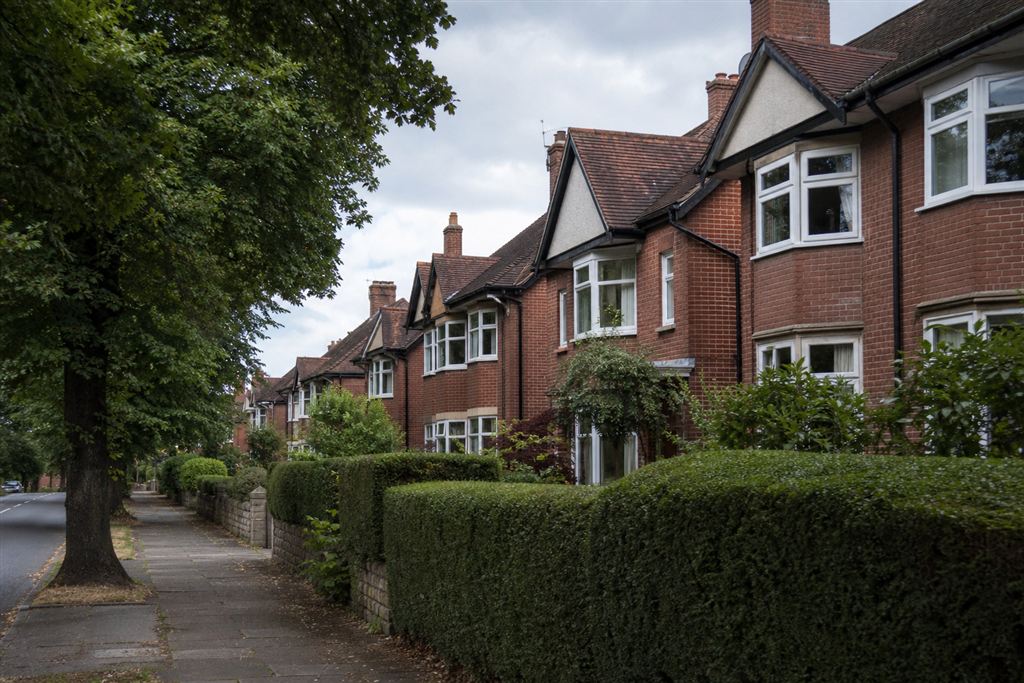
Most of the housing between Nursery Lane and Alwoodley Lane went up between the late 1920s and the 1960s. Alwoodley Park was sold from 1929 as semis, bungalows and detached villas; Primley Park followed in the same decade; The Avenue was finished after the war; The Mounts, the Buckstones, the Meadows and The Fairway filled in during the 1950s and 1960s. Those houses were built for the private car, with front gardens and mature street trees, not for a mill terrace yard.
The room under them is typically:
- a coal cellar or one-room utility, not a full-height habitable basement
- shared on one side with the semi next door (party wall)
- entered from inside the house, sometimes with a leftover coal chute to the front or side
- sitting on clay, with groundwater moving toward Adel Woods and the Meanwood valley rather than sitting in a river floodplain
Houses on the late-1970s golf-course streets (Sunningdale, Turnberry, Wentworth, Gleneagles — the old Moor Allerton Golf Club site) and 1990s Windermere Drive often have no traditional cellar. If your plot is one of those, say so on the survey form; we will not pretend a Type C job exists where there is only a floor slab.
Larger detached houses on Alwoodley Lane and the Sandmoor side toward Harrogate Road sometimes have a bigger cellar and a garden-level light well. That is a different access and discharge problem from a Primley Park coal hole, and the survey treats it as such.
Groundwater here is not the River Aire
Alwoodley Beck rises in wet ground on Moortown Golf Course, passes under King Lane, and runs into Adel Woods to join Adel Beck. Adel Beck marks the western edge of the parish and feeds the Meanwood valley on its way to the Aire miles downstream. Cellar water in this cell is usually:
- clay-held groundwater after heavy rain
- a failed or silted land drain on a large interwar plot
- seepage at the party wall or around the original coal chute
- water tracking from the golf-course wet ground toward King Lane
It is not canal-side or Worth Valley floodplain water. A specification written for a Keighley back-to-back, or for a millstone-grit villa on a hillside, will misread this stock. That is why this site does not share body copy with those towns.
After a wet week, homeowners on The Avenue and King Lane more often see a film on the cellar floor and salt on the lower brick than a river coming under the door. See: wet cellar after heavy rain in LS17
Type C, tanking, and slurry — in the language of this house
British Standard BS 8102 describes three ways of keeping groundwater out of a below-ground room. On an Alwoodley interwar semi we explain them like this, not as a specifier’s table:
- Type A (barrier) — a slurry or sheet stuck to the wall, hoping the brick never moves. On a 1930s party-wall cellar this often fails at the joint with next door, at the coal-chute reveal, or where clay shrinks and the wall cracks.
- Type B (structurally integral) — the concrete itself is the tank. That is a new-build idea. It is not how Alwoodley Park was constructed.
- Type C (cavity drain) — a dimpled membrane on the inside face, a channel at the floor/wall joint, and a sump that takes water to a drain you already own. The wall can still get wet; the room stays usable. This is the honest default on this stock.
tanking a cellar (what we actually install) cellar tanking vs Type C in Alwoodley houses Type C cavity drain, plain English
When this page says tanking membrane or cavity drain membrane, it is naming a component in a Primley Park spec — not offering a roll from a counter. Alwoodley Cellar Waterproofing is not a merchant.
Why a discovery survey comes before any figure
A plumber-template “free estimate” from the pavement cannot see:
- whether the stair, the coal chute, or a side door is the only access on a King Lane plot
- where a sump can sit without chewing the only dry patch of floor
- whether the rear combined drain will take a pumped outfall, or whether the run has to thread a root-protected front garden on The Avenue
- whether the party wall with the semi needs a Party Wall notice before anyone cuts a channel
- whether Leeds Building Control will want a full application for structural waterproofing (Alwoodley is Leeds, not Bradford)
The visit you book is a paid, scoped cellar discovery survey of this coal room. We will not pretend a King Lane pavement glance is a free estimate.
Cost is a range with variables, not a doorstep number. Full Type C on a small coal cellar and full Type C on a Sandmoor light-well room are not the same job. What cellar waterproofing costs in Alwoodley
Neighbour-sensitive works, not “we dig the whole garden”
Front gardens on The Avenue and King Lane carry mature oaks and beeches planted with the houses. Leeds planning and neighbours notice trenches, skips on the verge, and pumps running overnight. Type C is installed from inside. We do not excavate the front lawn to tank the outside of a 1930s semi as a first move.
Quiet residential access: vans on the drive, not a tanker blocking King Lane at school-run. If a pump-out is needed on a flooded-cellar first visit, we say so on the day — that is a different page. Flooded cellar in Alwoodley
Not a citywide list
People searching cellar waterproofing Leeds or basement waterproofing Leeds land on citywide hubs and county “areas we cover” footers. Those two Leeds-modified phrases are small (30 searches a month each ) and this site does not chase them as a title. Alwoodley is named in those footers; it is not specified in their surveys.
This page is cellar waterproofing in Alwoodley. We do not list Keighley, Ilkley, Bingley or a forty-town dump. Immediately adjoining streets that are actually Alwoodley — Nursery Lane, King Lane, Alwoodley Lane, Harrogate Road edge, Primley Park, Sandmoor — are in play. Moortown through-semis on Street Lane are a different cell and a different site, on purpose.
We also do not chase basement waterproofing as a money phrase. In this neighbourhood the room is a cellar. Conversion of that cellar into a habitable room is an upsell after it is dry. Cellar conversion in Alwoodley (after waterproofing) Every button on that page still books the waterproofing survey.
FAQs
Do typical 1930s Alwoodley semis actually have a cellar worth Type C, or just a coal hole?
Many Alwoodley Park and Primley Park semis have a coal cellar or a one-room utility under the hall — low headroom, original lime or brick, sometimes a leftover chute. That is still a cellar. Type C is worth specifying when the room is used (washing machine, freezer, storage) and groundwater or a failed land drain is wetting the walls. A dry meter cupboard that never sees a puddle is not a £10k–£30k job; we will say so on the survey rather than invent work. A coal hole that floods after rain on the King Lane / golf-course side of the parish is a different conversation.
Can works be done from inside so front gardens on The Avenue / King Lane stay intact?
Yes. Cavity drain is an internal lining. The Avenue and King Lane frontages are the wrong place to open a trench: mature canopies, neighbour sight-lines, and (on some plots) root protection that a “dig the outside” tanking job would fight. Access is the internal stair or the coal chute. Sump discharge is aimed at the existing rear drain where it exists, not a new run across the front lawn.
Is Alwoodley in a Leeds Building Control area and does tanking need a building-regs notice here?
Alwoodley is Leeds City Council Building Control — not Bradford, not Harrogate. Structural waterproofing of a below-ground room is not a tin of slurry that skips notice. Expect a Building Regulations application for a Type C install that changes drainage or structure. The discovery survey is there to record invert, construction, and proposed discharge so the notice is based on the house, not a template.
How is this different from a citywide “damp proofing Leeds” visit?
A citywide damp visit is often a rising-damp / timber / condensation circuit with Alwoodley in the coverage list. This survey is only the cellar: moisture map, party wall of the semi, sump position under a 1930s floor, outfall into the drain that already serves this plot, and whether Alwoodley Beck / clay groundwater is the source rather than a plumbing leak. We do not treat woodworm, and we do not arrive with a “Leeds and surrounding areas” clipboard.
If we might convert later, what does the surveyor record now so we do not rip the membrane out?
Headroom under the original joists, stair position, light-well (if any), party-wall thickness, and a sump location that will not sit under a future shower or stairs. Membrane laps and the perimeter channel are specified so a later floor finish can sit on the same Type C. Conversion is not the H1 on this site and is not quoted as a design-and-build from this page. Conversion after the cellar is dry
Party wall with a semi — who needs to be told?
Most Alwoodley Park / Primley Park houses are semis. If we cut a channel, fix a membrane, or alter the shared wall, the neighbour may need a Party Wall etc. Act 1996 notice before works, not after. The survey flags that. We do not assume a detached Sandmoor house has the same duty as a semi on The Lane or The Drive.
Our house is on Sunningdale / Turnberry — do we even have a cellar?
Those streets sit on the late-1970s redevelopment of the old Moor Allerton Golf Club. Many of those houses were built without a coal cellar. Tell us the street on the form. If there is only a slab, we will not write a Type C specification to fill a page.
Is a sump noisy on a quiet King Lane plot?
A correctly specified packaged sump in a small utility cellar is a short, occasional run, not a pub cellar pump. On a quiet Alwoodley street the survey notes sleeping rooms above and chooses a location and lid accordingly. Details: Sump pumps in Alwoodley cellars